fairy cakes

SUPPORTING OUR COMMUNITY


Supporting our community is central to our mission. As the world adjusted to life with Covid-19, we produced a series of guidance documents for researchers working in areas severely impacted by social restrictions and, as the vaccine roll out made in-person events possible again, we provided much-missed social and networking opportunities for our PhD community. Responding to the COP26 conference in Glasgow, we worked with partners at other UK organisations to support advocacy for climate change action in data-led research. We were also pleased to be able to provide bursaries and fellowships, for both online and in-person activities, and to welcome new fellows and affiliates to the CDCS community.

DHCC logo

Greening DH & Digital Humanities Climate Coalition

In November, we hosted a public discussion and community workshop focused on Greening DH, to explore how researchers could collaborate to lower the environmental impact of their digital work. Bringing together representatives of centres and research groups from universities across the UK, as well as other research organisations and funders, the workshop led to the formation of a series of working groups under the banner of the Digital Humanities Climate Coalition. We're proud to be supporting this work which has just delivered its first outcome - A Researcher Guide to Writing a Climate Justice-Oriented Data Management Plan.

Find out more

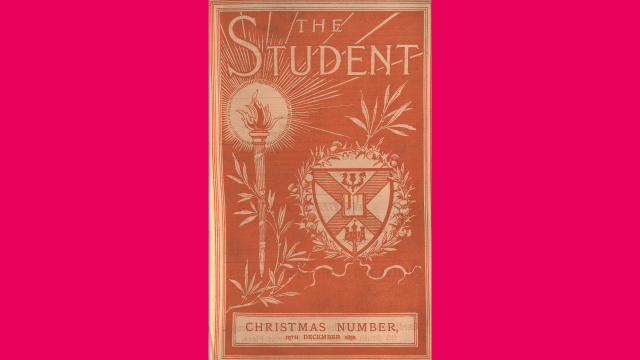
Front cover of The Student Christmas 1892

Digital Library Internship


We've partnered with the Digital Library team to offer two internships this year with the aim of developing skills and supporting the creation of digital collections. PhD students Ash Charlton and Vesna Curlic are working with us to digitise the University's student newspaper, and to develop a training pathway on digitisation, OCR and working with digitised documents. 


Research Adaptation Guidance 

The second year of the global Covid-19 pandemic has seen the introduction of vaccines and a corresponding decline in social distancing and travel restrictions. However, throughout much of this year, researchers have still had to work online and at a remove from their subjects and audiences.  In Summer 2021, CDCS produced a series of guides designed specifically for researchers within the College, with advice on services, tools and remote research methods.

phone with social media icons

In collaboration with CAHSS Research Ethics Committee and CDCS, a group led by Professor Ailsa Niven developed a document focused on the ethical issues involved in social media research.

Social media research: ethical guidance

 It’s great to be building partnerships with places like CDCS that are taking open and justice-led approaches to grand challenges.

- James Baker, Director of Digital Humanities at Southampton, Co-founder of DHCC

IASH Fellowships 21/22

We are delighted to welcome two visiting scholars this year, who will both take up their fellowships in Summer 2022. 

Jen Guiliano
Digital Scholarship Visiting Research Fellow

Dr Jennifer Guiliano

Jennifer Guiliano is Associate Professor in the Department of History and affiliated faculty in both Native American and Indigenous Studies and American Studies at IUPUI in Indianapolis, Indiana.  As part of her Decolonizing Knowledge Production through Linked Open Data project she will spend two months exploring knowledge production as it relates to the Scottish context of Indigenous data. 

Malika Leuzinger
Digital Scholarship Postdoctoral Fellow

Dr Mallika Leuzinger 

Mallika Leuzinger is a visiting researcher at Humboldt University in Berlin. Her project Archival Imaginaries and the Politics of History in South Asia looks at the rise of digital crowdsourced platforms dealing in histories of the Indian subcontinent. It asks how, why and for whom these platforms constitute 'archives'. It examines the affective, material, visual and geopolitical registers they deploy and conjure, situating them in relation to institutional and/or stubbornly analogue collections; activist media projects; and popular history initiatives in Africa and the Middle East.

programming Historian Logo over mashup

Institutional Partner of Programming Historian


We're delighted to be renewing our partnership with the Programming Historian again this year, and using their wonderful tutorials in our training programme. As a partner, CDCS is supporting the growth and sustainability of the PH website, and helping to ensure that the materials they publish remain open and accessible.

Visit the Programming Historian

Supporting Access to Proquest TDM Studio

This year we have also invested in ProQuest's TDM Studio, a workspace in which researchers have been able to explore and analyse ProQuest data. The service consists of a cloud-based platform on Amazon Web Services with examples of Jupyter notebooks that can be used to process the collections of papers. By making services like this available to our community, we aim to ensure they have all the tools they need to adopt data-led methods.

One of our first projects using TDM Studio is led by Dr Galina Andreeva in the Business School, who is using this service to automate some parts of literature review writing. She is interested in the new form of credit/funding that has emerged recently – peer-to-peer (P2P) lending - and using the query search she has extracted the academic papers that contain this term (and related ones). ProQuest also gives the possibility to extract business reports and business news articles which she is analysing separately. The objective is to compare the narratives between academics and practitioners, in order to identify areas of (dis)agreement and potential gaps/research questions. ProQuest sample notebooks allow you to produce counts of papers by year, most frequent words and their contexts/ embeddings, counts on named entities, topic modelling. Together with Rayna Andreeva, a PhD student from Informatics, Galina is working on creating a workflow of automated process. They hope to use this work to investigate which parts/tasks can be automated, and which parts of a literature review will still require subjective/qualitative input.

future culture

Future Culture Edinburgh


We were delighted to be able to support PhD researcher Vikki Jones to hold Future Culture Edinburgh, a hybrid workshop intended to inspire creative thinking and collective action towards a more equitable and inclusive future of culture in the city. Held in Leith Theatre, this event was simultaneously broadcast on Zoom. Following provocations from invited speakers, there were workshop activities using the whiteboard tool Miro, and breakouts to establish collective solutions-based approaches to addressing challenges and seizing opportunities for the benefit of Edinburgh’s cultural ecosystem.

New Affiliates

Research Affiliate

George Oates

George is Executive Director & Founder of The Flickr Foundation.

Research Affiliate

Kevin Glynn

Kevin is Associate Professor in Geography & Environmental Sciences at Northumbria University.

PhD Affiliate

Naomi Korn

Naomi is working towards a PhD in Literatures, Languages and Culture. She is looking at the impact of Brexit on the management of copyright works by UK cultural heritage organisations.

PhD Affiliate

Francisca Anita Adom-Opare

Francisca is a PhD student in School of Social and Political Science. Her research critically examines the conceptualisation, framings and practicalities of disability inclusion in Ghana.

PhD Affiliate

Ayça Atabey

Ayça is a second-year PhD candidate in Law. Her research explores fairness by design and focuses on protecting vulnerable data subjects in their involvement with AI-driven technologies.

Training Bursaries

We've awarded two training bursaries this year, enabling researchers to take training provided by other organisations.

Ayca Atabey

Ayça Atabey

Social Research Association Online Courses in Depth Interviewing Skills and Analysis of Qualitative Data, Summer 2021. 

Elif Buse Doyuran

Elif Buse Doyuran

Digital Methods Winter School, University of Amsterdam (online), January 2022.

As a PhD researcher coming from a law background, I had very little experience in empirical research and no experience in the methods used when doing empirical research. Thanks to the CDCS bursary, I became confident in doing in-depth interviews and carrying out empirical research, helping me with data collection and analysis, and making a massive difference for a PhD student passionate about carrying out interdisciplinary research.  

- Ayça Atabey, Bursary Recipient 2021