Background image with trees

Projects


Interdisciplinary digital and data-led research is rarely a solo effort. We continue to cultivate a community where innovative ideas are supported and where collaboration enriches the University's research culture. In 2024–25, we supported a wide range of projects from early-stage planning and proposal development to post-award technical development.

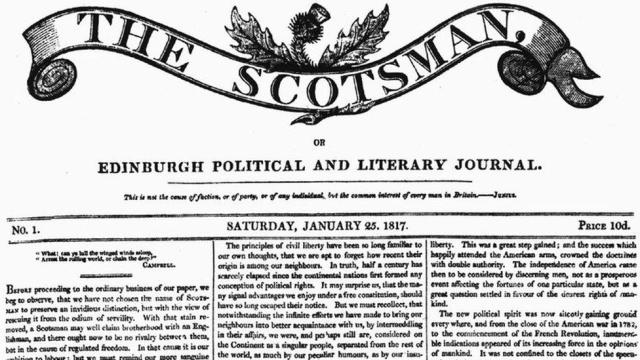
the scotsman

DISKAH Fellowship


Jessica Witte, CDCS Digital Research Analyst, was awarded a fellowship from the Digital Skills in the Arts & Humanities (DISKAH) Network. Over the course of the year-long fellowship, she is developing a workflow using fine-tuned large language models (LLMs) to correct complex OCR errors in The Scotsman newspaper archive. She is also creating resources to support arts & humanities researchers using high-performance computing (HPC) infrastructure such as the University's Eddie cluster.

CDCS Digital Research Sandpits

The CDCS Digital Research Sandpit offers support to researchers at the early stages of their projects in developing prototypes or proofs of concept. Sandpit participants can also receive small project funding to support the purchase of relevant datasets, software or equipment, or the time of research assistants. This year, we were pleased to see two prototypes evolve into full-scale projects:

Dr Rochelle Rowe, 'Performative Blackness and Black Histories in Scotland'

How was Blackness represented and performed onstage in Scotland between 1839 and 1939? Dr Rochelle Rowe, Lecturer in the School of History, Classics & Archaeology, explores this question through a decolonial lens in her AHRC Catalyst-funded project set to begin later this year. Rochelle is investigating how Blackness was staged in both professional and amateur contexts, and how these performances contributed to constructions of race and identity in Scotland. A key output of her work will be a public-facing digital database hosted on the project website. During the 2023 Rapid Prototyping Sandpit, CDCS supported Rochelle in honing her project idea and developing the data architecture for the database. We look forward to continuing our collaboration by providing research technology support throughout the project.

Dr Kenneth Fordyce, UK Parliament Discourse on Immigration (2007-2024)

Dr Kenneth Fordyce, Senior Lecturer in Language Education, is investigating how discourse around immigration has changed in UK parliamentary debates since 2007. Supported by our technical team, Dr Fordyce extracted parliamentary transcripts from the Hansard Parliamentary Debates Archive related to migration and asylum. Dr Fordyce plans to use text analysis methods from computational linguistics to explore the dataset, which will become a proof-of-concept for a database tracking political discourse on immigration. Early findings were presented in two conference papers this summer and have paved the way for what, we hope, will be a successful funding bid supporting Dr Fordyce in scaling up the project.

Digital Research Fund Projects

We have a rolling open call for applications to our Digital Research Fund, which can cover software and hardware costs, the cost of technical help, and other research-related expenses. This year, we supported 7 researchers in purchasing hardware, acquiring datasets, hiring technical staff, and showcasing their work.

  • Pip Thornton: Machine Whispers
  • Alexandra Huang-Kokina: Oper-AI: Innovating Audience Engagement and Participation in Immersive Opera
  • Will Zhang: Does Simulated Spending Increase Actual Spending on Virtual Goods?
  • Martha Bohm: Back of the Envelope.
  • Wang Tong: Shadow Influencer: A Generative AI-Based Content Creator Assistant
  • Susan Lechelt: Cultivating Calm: Using Technology to Bridge Urban Isolation, Slow Down and Reconnect with Nature
  • Dayu Sari: Enhancing the Capacity of Blue and Green Infrastructure to Develop Cultural Ecosystem Service: Case Study of Jakarta Metropolitan Area, Indonesia

IASH Fellowships 2024-25

photo of a man with a beard wearing a dark blue shirt
Digital Visiting Research Fellow

Dr Artur R. Boelderl

The Book Not to Come: How Digitization Affects Literary Research and Text Theory

An essential part of Austria’s cultural heritage, listed in UNESCO’s Memory of Austria, the literary estate of Robert Musil (1880-1942) has been among the earliest to receive digital editorial treatment. This project devises a new method for annotating the Musil text that re-integrates traditional types of commentary as well as allows for innovative, author-transgressing references, belonging to the overall “spirit” – or interdiscursive constellation – of an era rather than to an individual and his or her contingent capacities. The envisioned approach calls for the elaboration of additions to the TEI guidelines, including encoding suggestions for under-examined aspects of (mostly literary) texts.

headshot
Digital Research Postdoctoral Fellow

Dr Stephanie Lamprea

A Feminist Digital Voice in Electroacoustic Music and Interdisciplinary Performance Art​

As machine-learning materials are utilised in electroacoustic and interdisciplinary works, it is pertinent to embark on feminist research of this technology and art-making to preserve, develop, and safeguard the spoken, sung, and signed female voice in a post-humanistic age. Through new practice-based research, Dr. Lamprea develops two postdoctoral projects: a live concert performance for voice, live electronics, wearable performance technology, and integrated British Sign Language, and an interdisciplinary video installation. These projects are rooted in several theoretical models including queer voice theory, feminist new materialism and posthuman feminism, feminist ethnography, D/deaf musicology and signed voice, and voice-body-machine entanglement.

headshot
Digital Research Postdoctoral Fellow

Dr Alexandra Huang-Kokina

Artificial ‘Emotional’ Intelligence for Opera Theatre: Innovating audience engagement in contemporary science-fiction opera

The surge in Artificial Intelligence (AI) has sparked debates about its impact on human expression and connection in the creative arts. This project explores how AI may complement and augment embodied dimensions of human artistic creativity in live music performance settings. It uses ‘science-fiction opera’ – an operatic subgenre that integrates sci-fi narratives with speculative technologies – as a pivotal case study to examine AI’s potential and challenges in enhancing audience engagement in a digitally-mediated theatre.