Inferential Statistics

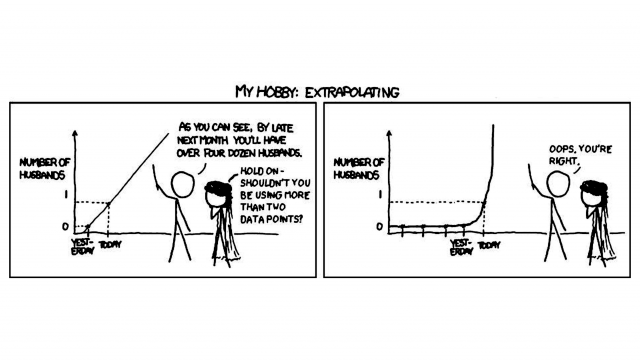
XKCD Comix

Inferential statistics help to suggest explanations for a situation or phenomenon, by inferring the characteristics of the whole population based on the sample collected. With inferential statistics, you are trying to reach conclusions that extend beyond the immediate data alone. 

The main difference between inferential and descriptive statistics is that the latter will just describe your data, while inferential statistics will draw a general conclusion that will represent the whole population.

Null Hypothesis testing (choose the right test)

 Choosing the right test to perform on a sample can be very complicated and it is also influenced by the distribution of your data sample. Before starting testing your sample you always have to go through the same steps:

  1. Observe the dataset you are going to perform the test on: you really need to know the structure and content of it very well to be able to select the right method
  2. Define the hypothesis you want to test: this need to be translated into something that the system will understand. It is often a good idea to properly write it down.
  3. Define the Null hypothesis: once you have defined your hypothesis you need to identify the contrary of your hypothesis. This step is sometimes very hard in humanities and social sciences because not always there are just two mutually exclusive hypotheses. Being aware of it will make the difference between a good and a poor interpretation of the results.
  4. Choose the right method to compare the formal model against your data: the choice of the right method is connected to the structure of your data and the hypothesis you are trying to test. 

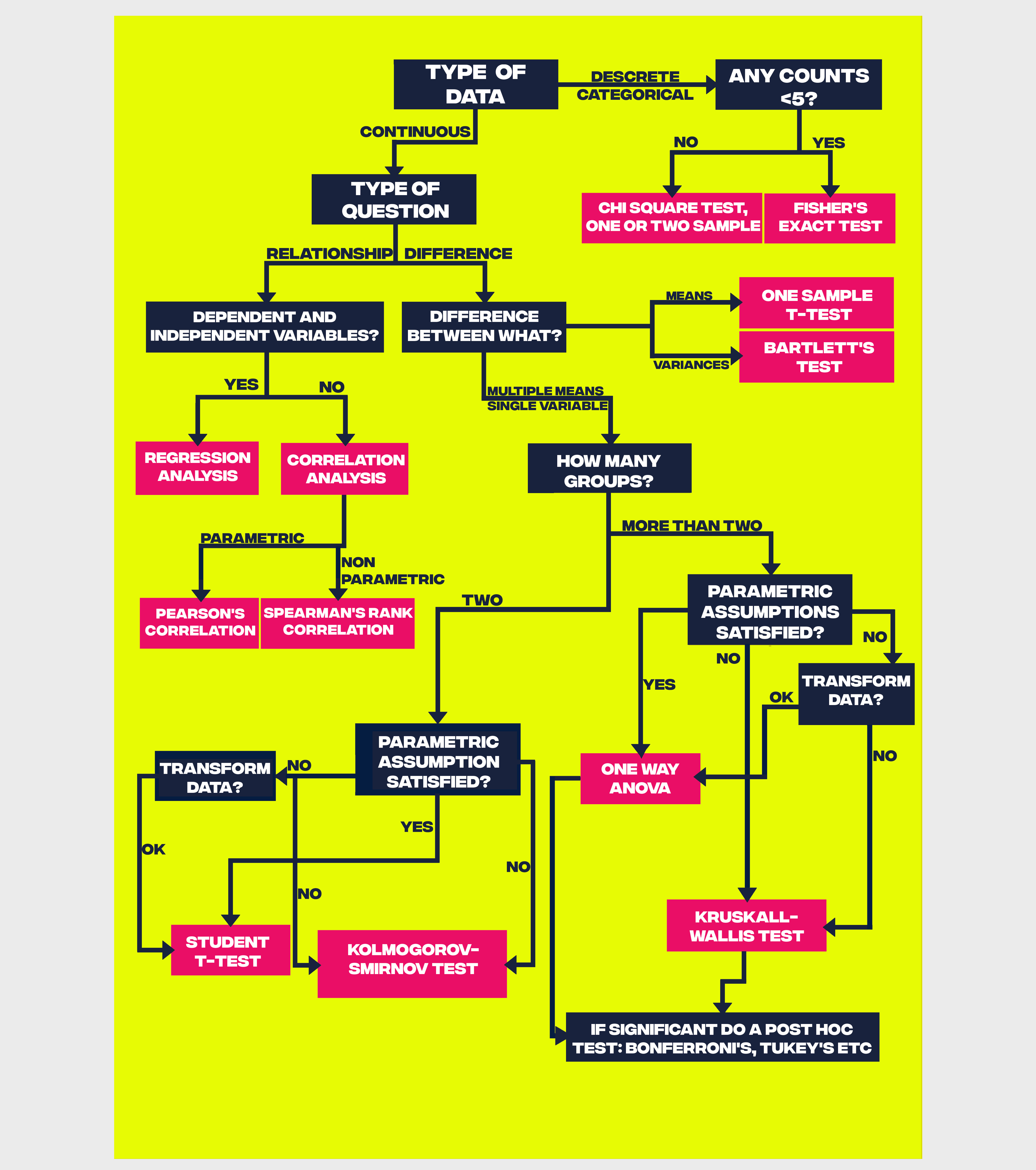
Below is a flow chart to help you with deciding which test to use. 

Access a machine-readable version of this flowchart in Microsoft Forms


Tests Chart flow