
From the CNN Effect to the SNN Effect
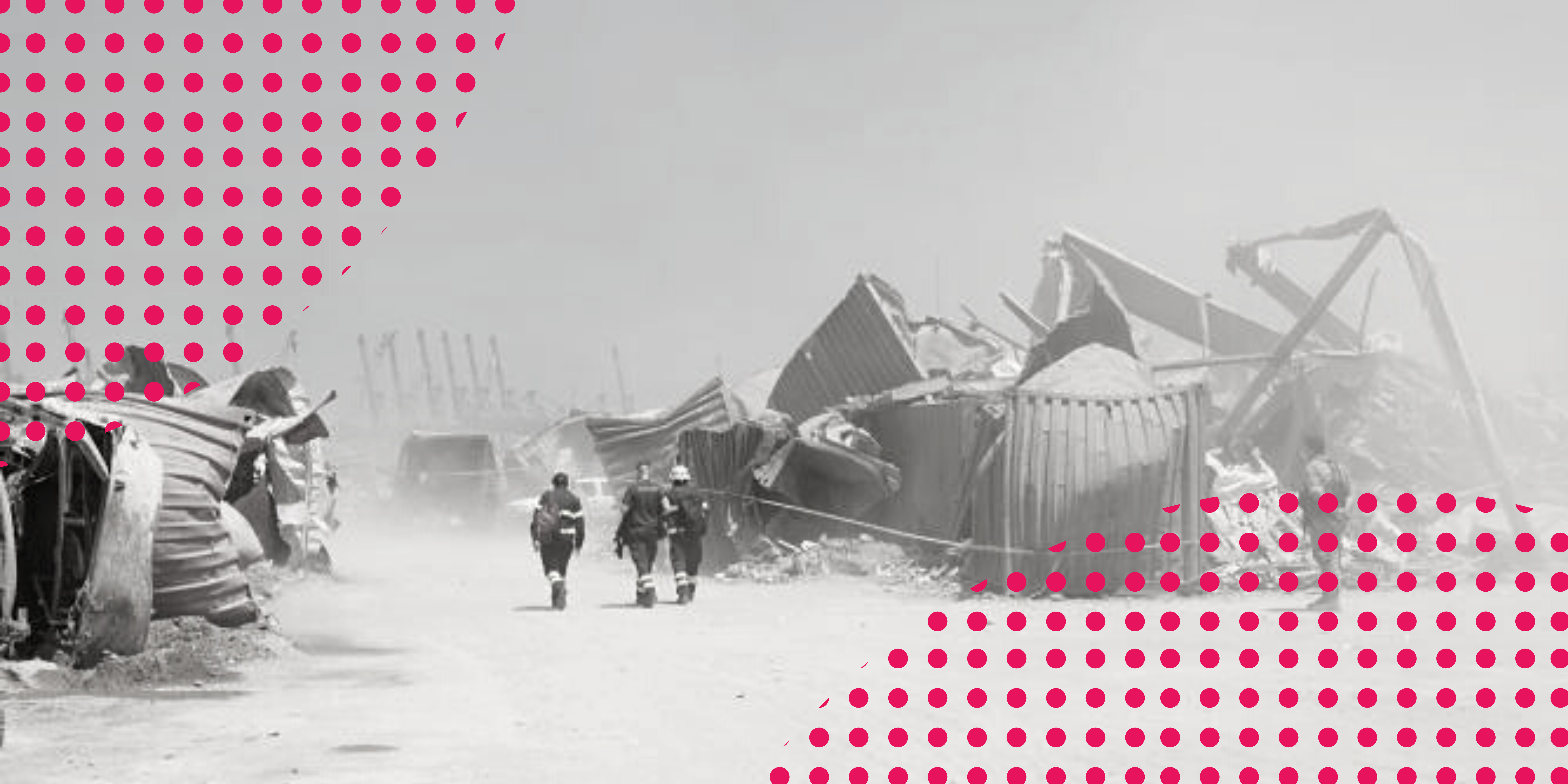
Dr Kate Wright presents 'From the CNN Effect to the SNN Effect: How media influences governments’ decisions about the allocation of humanitarian aid.'
Paper Abstract
Does media influence governments’ allocation of humanitarian aid – if so, how? This question has puzzled media and political communication scholars since the 1990s, with grand claims being made for the so-called ‘CNN Effect’, many of which were subsequently discredited. This paper revisits these issues question in an age of hybrid media systems, which incorporate mainstream news and social media.
Using rare in-depth interviews with 30 directors and senior policymakers in 16 of the world’s largest donor countries, we found evidence of another phenomenon, which we call the ‘SNN Effect’. This is because these policymakers consistently claimed that sudden-onset, national news coverage could increase the amount of emergency humanitarian aid allocated to a crisis. They said that this influence operated by triggering multiple accountability institutions (the public, civil society, elected officials) who then put pressure on aid bureaucracies to announce additional funding.
However, we found that annual humanitarian aid allocations—which are much larger—were instead influenced by the lack of news coverage. This was because bureaucrats thought that other governments were more influenced by news coverage than they were, so increased their annual aid allocations to what they thought were “forgotten crises”.
I argue that “bureaucratic mediatisation” provides the best theoretical perspective to understand the role of news in both kinds of decision-making. But it still does not quite address what was perhaps the most surprising finding: that is, that despite the vast amounts spent on social media by aid agencies, it was still found to have a negligible effect on policymaking because bureaucrats believed that it did not have ‘sufficient cut through’ with the public.
Full, co-authored article in Journalism Studies: https://www.tandfonline.com/doi/full/10.1080/1461670X.2021.2013129?src=
Blog in Nieman Reports/Harvard University: https://www.niemanlab.org/2022/01/new-research-shows-how-news-coverage-influences-countries-emergency-aid-budgets/
Speaker Biography
Dr Kate Wright is Academic Lead of the interdisciplinary research cluster in Media and Communications at the University of Edinburgh. Kate studies the political economies and practices of international news and humanitarian journalism, and is particularly interested in how different models of funding - such as private foundations, and state funding - shape news production and media content.
Booking Information
Upon booking, attendees will receive an automated confirmation email which will contain a link to the online event page. This event will take place on Zoom. Attendees will receive a second email closer to the event booking which will also provide the link to the online event page. Please use the same email for registering with Eventbrite and when logging into Zoom.
Event Information
This is a webinar, which means that attendees’ microphones and cameras will be off. There will be opportunities for participants to turn their microphone on and ask questions during the discussion. This event will have live captions. Please inform us of any access requirements by emailing cdcs@ed.ac.uk. The event will be recorded and uploaded onto the CDCS website afterwards for public viewing. Further details about how CDCS uses your information obtained from booking onto our events can be found at in our Events Privacy Statement.
Event recording
First broadcast on 9 February 2022.
This recording is licensed under CC BY-NC 4.0.
To watch in full screen mode via Media Hopper, click here.