
Heritage-based tribalism in big data ecologies and the role of ‘experts’
Dr Chiara Bonacchi (University of Stirling) presents: Heritage-based tribalism in big data ecologies and the role of ‘experts’
Abstract
This presentation discusses the ways in which ‘expert’ interpretations of the past resulting from archaeological research can be appropriated, on social media, for purposes of antagonistic othering.
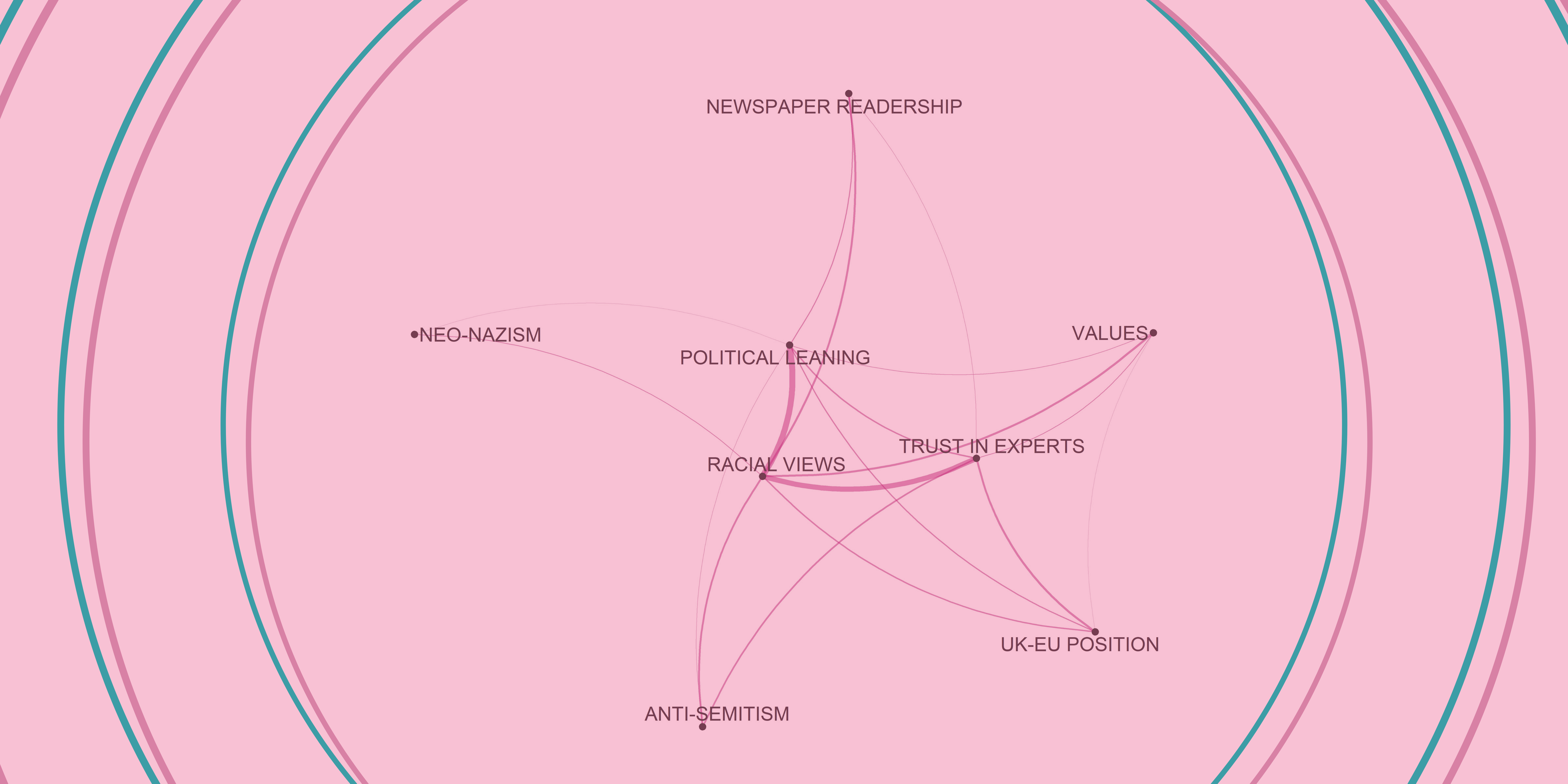
Published literature has stressed that the public communication and experience of archaeology today are affected by: neoliberal logics within academies; the information deluge enabled by the Internet; the persistent influence of news media industries; and a supposed erosion of trust in academic expertise. This paper reflects on the relationships between such phenomena and the kinds of public ‘uses’ of the past that hinder social cohesion in big data ecologies. It draws on the quantitative and qualitative analysis of people’s engagements, on Twitter, with news about the ancient DNA of a Mesolithic individual called Cheddar Man. Results show that heritage-based tribalism in big data ecologies is uniquely shaped as an assemblage by the coalescing of different forms of antagonistic othering. Those that co-occurred most frequently were the ones that drew on ‘Views on Race’, ‘Trust in Experts’ and ‘Political Leaning’. The framings of the news that were most influential in triggering heritage-based tribalism were introduced by both right- and left-leaning newspaper outlets and by activist websites.
It is concluded that heritage-themed communications that rely on provocative narratives on Twitter tend to be labelled as political and not to be conducive to positive change in people’s attitudes towards issues such as racism. These results are situated in the context of existing literature and other research previously undertaken on uses of the past to support or oppose populist nationalist positions on social media. The presentation ends with a reflection on the scope and spaces for interventions within archaeology and heritage aimed at developing counter-narratives and counter-practices of tolerance and inclusivity.
Speaker Biography
Dr Chiara Bonacchi is Senior Lecturer in Heritage at the University of Stirling, where she leads the Digital Heritage Pathway of MSc Heritage. From 14 March 2022, she will join the University of Edinburgh (HCA and EFI) as Chancellor's Fellow in Heritage, Text and Data Mining and Senior Lecturer in Heritage. Her research focuses on the intersection between heritage, data and politics. She is the author of Heritage and Nationalism. Understanding Populism through Big Data (UCL Press, March 2022) and recent projects in which she has been involved include: Ancient Identities in Modern Britain (CI, 2016-19, AHRC); Curating Urban Transformations through Heritage (CI, 2020-22; JPI-CH) and Co-Producing Tolerant Future Through Ancient Identities (PI, 2022, AHRC). Chiara is member of the international executive committee of the Association of Critical Heritage Studies.
Booking Information
Upon booking, attendees will receive an automated confirmation email which will contain a link to the online event page. This event will take place on Zoom. Attendees will receive a second email closer to the event booking which will also provide the link to the online event page. Please use the same email for registering with Eventbrite and when logging into Zoom.
Event Information
This is a webinar, which means that attendees’ microphones and cameras will be off. There will be opportunities for participants to turn their microphone on and ask questions during the discussion. This event will have live captions. Please inform us of any access requirements by emailing cdcs@ed.ac.uk. The event will be recorded and uploaded onto the CDCS website afterwards for public viewing. Further details about how CDCS uses your information obtained from booking onto our events can be found at in our Events Privacy Statement.
Event recording
First broadcast on 23 February 2022.
This recording is licensed under CC BY-NC 4.0.
To watch in full screen mode via Media Hopper, click here.